Introduction
In today’s corporate environment, appraisal discussions are no longer just about numbers - they are about narratives, perception, and influence.
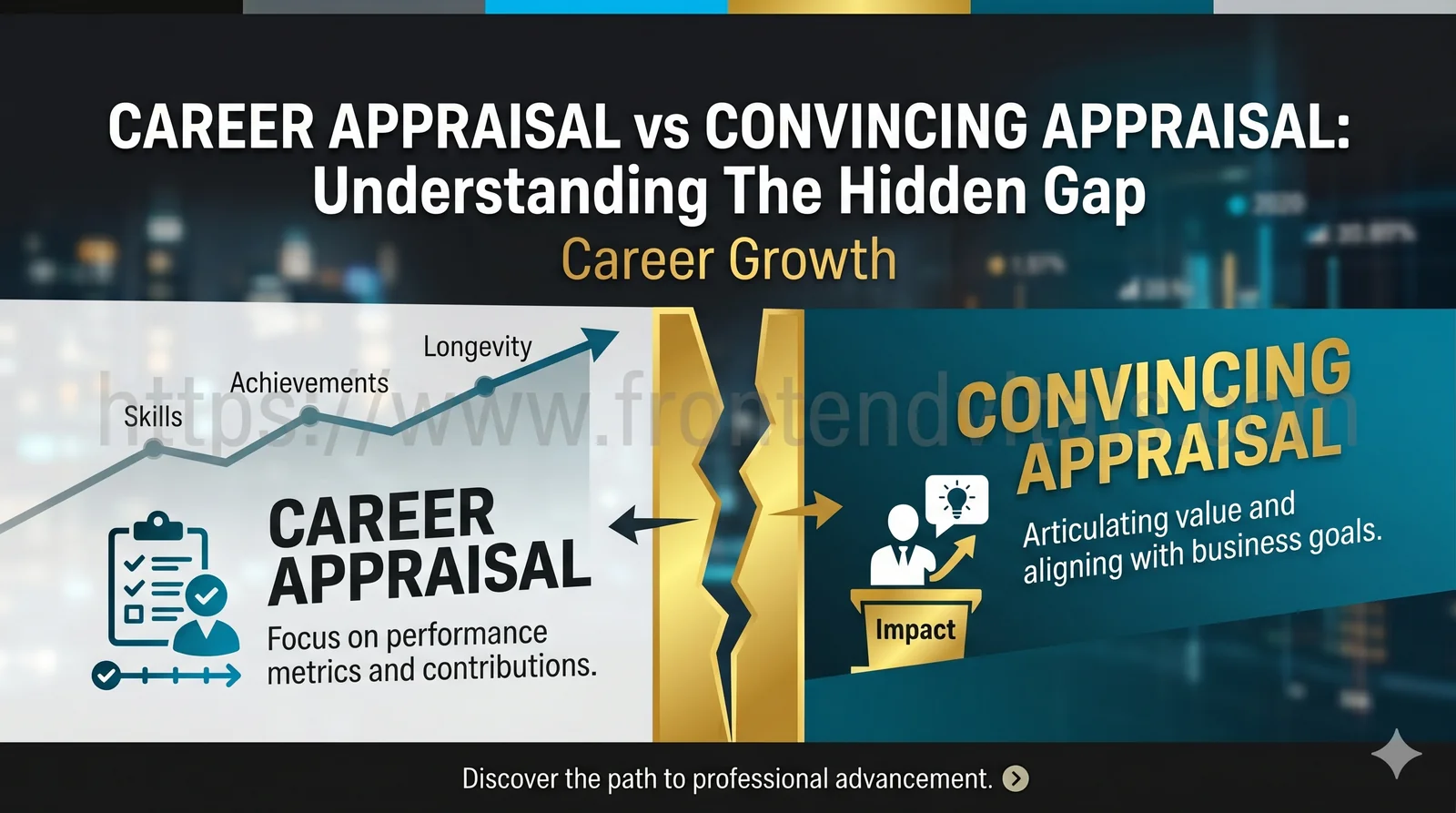
Many professionals walk into appraisal meetings expecting a Career Appraisal: a fair evaluation of contributions, growth, and impact. However, they often walk out feeling like they experienced a Convincing Appraisal: a conversation designed to justify predefined outcomes.
This post breaks down the difference, why it happens, the psychology behind it, and how to handle appraisal conversations strategically - without becoming cynical or emotional.
What Is A Career Appraisal?
A Career Appraisal is structured around growth, transparency, and merit.
It focuses on:
- Measurable contributions and outcomes
- Skill development and career progression
- Honest feedback (both strengths and gaps)
- Alignment with long-term career goals
The intent: reward fairly and guide future growth.
The outcome: the employee feels valued, clear, and motivated.
What Is A Convincing Appraisal?
A Convincing Appraisal is driven more by organisational constraints than individual performance.
It typically includes:
- Budget-driven justifications
- Selective highlighting of feedback
- Framing limitations as “market conditions”
- Emotional persuasion instead of data-backed discussion
The intent: gain acceptance of a decision already made.
The outcome: the employee feels uncertain, undervalued, or confused.
Where Psychology Comes Into Play
Often unintentionally, both managers and HR use psychological techniques during appraisals. Recognizing them helps you stay grounded and ask better questions.
Anchoring Effect: Setting The Baseline Early
You’ll hear lines like:
“This year has been challenging for the company...”
This creates a mental baseline before outcomes (ratings, bands, hike numbers) are even discussed.
Framing Technique: Shaping Perception Without Changing Facts
The same outcome can feel very different depending on the frame:
- “You got only 8% hike” ❌
- “You are among the top 20% performers” ✅
Framing isn’t always dishonest - but it can be used to shift attention away from what you actually expected.
Recency Bias: Overweighting The Latest Events
Recent mistakes or recent wins can dominate the conversation, even when your performance has been consistently strong all year.
Comparison Bias: Using Peer Context Without Clear Benchmarks
You may hear:
“You are doing well compared to your peers...”
If there are no clear benchmarks, comparisons can become a substitute for metrics.
Why The Gap Exists
The mismatch between Career vs Convincing appraisal often happens because of real constraints, not necessarily manipulation.
Common drivers include:
- Fixed budget allocations
- Internal pay parity constraints
- Retention strategies
- Lack of structured performance metrics
- Manager’s communication skills
Not all convincing appraisals are intentional. Many are situational compromises that get communicated poorly.
How Professionals Should Respond
Instead of reacting emotionally, treat appraisals like a structured business conversation.
Shift From Emotion To Evidence
Build a simple evidence pack that includes:
- Achievements with measurable impact
- Revenue, cost, or efficiency contributions
- Leadership and ownership examples
If you can quantify outcomes, do it. If you can’t, describe scope and risk clearly.
Ask Structured Questions
Use questions that force clarity:
- “What specific metrics define top performance here?”
- “What would justify a higher band next cycle?”
- “Where exactly am I falling short - and how is that measured?”
Separate Feedback From Outcome
Sometimes:
- Feedback = positive
- Outcome = constrained
Understanding that these can be decoupled helps you respond rationally, even if you disagree with the outcome.
Build Year-Round Visibility
Don’t wait for appraisal season.
- Share monthly impact updates
- Highlight wins in team forums
- Align regularly with your manager
Visibility doesn’t replace performance, but it prevents your impact from being “rediscovered” only once a year.
For Managers And HR: A Better Approach
If you want to move from convincing -> career-focused appraisals:
- Be transparent about constraints early
- Use data instead of narratives
- Avoid over-justification
- Align expectations throughout the year
- Treat appraisal as a continuation, not a surprise
When people understand the system, they can plan inside it. When they don’t, they assume the system is designed against them.
Conclusion
A Career Appraisal builds trust. A Convincing Appraisal manages reactions.
Organizations succeed long-term when they prioritize clarity over persuasion and growth over justification. Because employees don’t just remember the number - they remember the fairness of the conversation.
Key Takeaways
- Know what you’re walking into: career appraisals are merit-and-growth driven; convincing appraisals are constraint-and-acceptance driven.
- Spot psychological patterns: anchoring, framing, recency bias, and comparison bias can shape perception without changing outcomes.
- Respond with structure: bring evidence, ask metric-based questions, and separate feedback from constrained outcomes.
- Build visibility year-round: consistent communication reduces surprises and strengthens your position in future cycles.